Obsidian Knight — RPG Games
- 4.5
- Rating
- 1.00M
- Installs
- Free
- Price
 Analysis by App-foxy
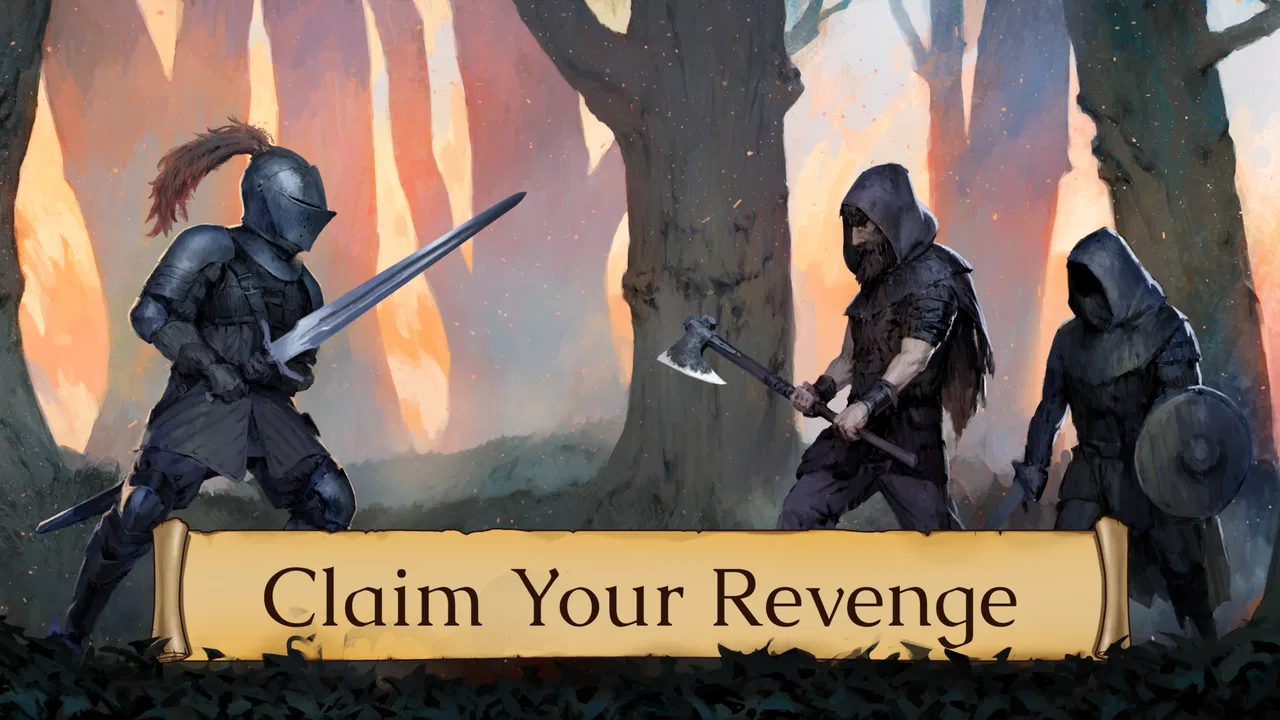
I spent time with Obsidian Knight as a mobile role-playing game built around an idle medieval adventure. Its central appeal is easy to understand: you guide a knight through dangerous encounters, face groups of enemies and giants, and keep pushing toward the king. That setup gives the game a clear sense of purpose without asking me to learn a complicated story before I can play.
What makes this release worth examining is not only the fantasy setting. It is also how comfortably the game fits into different routines and abilities. An idle RPG can be useful when someone has only short periods of attention, limited time for repeated tapping, or difficulty managing fast action. At the same time, “idle” does not automatically mean effortless or universally accessible. Menus, visual effects, upgrade decisions, and the pressure to return regularly can still create friction.
ActFirst Games presents the title as a free game in the role-playing category, with optional purchases ranging from $0.99 to $48.99 per item. It is rated Teen, and the game runs on Android devices using version 7.0 or later. The current version is 2.3.7, and its release date was Nov 25, 2024. Those details matter because this is the kind of game I would install for gradual progress rather than a single short session.
You May Also Like

 Blood Strike: 2.5 Anniversary
Blood Strike’s Loadouts Turn Every Drop Into a Tactical Gamble
A close look at Blood Strike’s custom loadouts: how fast access to signature weapons reshapes its battle royale rhythm, rewards preparation, and narrows the gap between fights.

 Pandora - Music & Podcasts
Pandora’s Music Is Easy to Start, but Harder to Recover
Pandora’s strength is its low-effort path from a seed to a station. Its weak spot is how much confidence it asks you to place in connection, setup, and quiet recovery.

 8 Ball Pool
 Is Built on Rivalries, Rematches, and Routine
A close look at the rivalries, rematches, shared routines, and unanswered safety questions that turn a quick pool match into a persistent mobile community.

 Samsung Music
’s Quiet Strength Is Playing What You Already Own
Its reach comes less from spectacle than from dependable access to a personal library. That simplicity is both the app’s strongest retention engine and its ceiling.

 AccuWeather: Weather Radar
AccuWeather Review: A Quick, Clear Forecast for Everyday Decisions
For everyday plans, the best forecast is the one you can understand quickly. AccuWeather makes rain timing, radar, and local conditions easy to act on, with a few trade-offs.

 Hill Climb Racing
Why Hill Climb Racing Still Turns Crashes Into One More Run
A tiny car, a bumpy hill and one more upgrade: Hill Climb Racing keeps resurfacing because its simple chaos makes every near-miss feel personal.
More From Our News Desk



How clearly the game communicates what to do
My first impression is that the medieval goal gives the experience a useful anchor. I am not dropped into an abstract collection of menus with no context; the knight’s journey, the enemy legions, and the search for the king provide a straightforward reason to continue. That clarity helps when I return after a break, because I can quickly understand that progression is still tied to overcoming the next obstacle.
For players who find dense role-playing games tiring, the idle structure can reduce the amount of constant navigation required. I do not need to treat every moment as a high-speed reaction test. The game is better suited to checking progress, making a few decisions, and then letting the adventure continue. This makes it more approachable than many action-heavy mobile RPGs that expect continuous attention and repeated combat input.
There is an important distinction, though, between simple navigation and simple decision-making. An idle RPG may reduce physical input while increasing the importance of understanding upgrades, equipment, resources, and progression choices. I found that the most comfortable way to play was to pause before spending anything, identify what would help the next difficult encounter, and avoid treating every available improvement as equally valuable.
That habit is especially useful for people who process information more slowly or who prefer predictable routines. Instead of tapping through every option immediately, I would check the current obstacle, review the available improvement, and then decide whether the benefit justified the cost. This turns the game into a manageable sequence of small choices rather than a stream of demands.
The game’s readable appeal also comes from its scale. It is not trying to imitate a large console-style adventure with a huge number of systems competing for attention. Its identity is narrower: a knight, a medieval threat, and incremental progress. For me, that focus makes it easier to recommend to someone who wants role-playing flavor without committing to long dialogue scenes or complex real-time battles.
Still, players who need extremely explicit instructions may want to approach carefully. The broad objective is obvious, but the best way to optimize progress in an idle RPG is rarely obvious from the premise alone. The practical solution is to learn the rhythm of the game slowly: observe what causes a wall in progression, improve one relevant area, and then test the result instead of spending resources randomly.
Reading the screen without rushing
Visual clarity matters more in an idle game than it might seem. Since much of the experience involves checking progress and comparing choices, crowded panels or small labels can make a supposedly relaxed game feel demanding. I found that this type of title works best when I give myself permission to stop and inspect the screen rather than making upgrades while distracted.
That leads to a useful everyday workflow. If I am playing during a quiet break, I can look at the current stage, identify the strongest immediate problem, and make one deliberate change. If I am tired, commuting, or sharing my attention with another task, I avoid making important spending decisions. The game can fit into those moments, but not every moment is suitable for careful progression planning.
The Teen rating is also relevant for families deciding who should play. I would not treat the title as a children’s game simply because its controls are approachable. Parents and older players should consider the fantasy combat tone and the presence of optional purchases before allowing unsupervised play.
Motor, sensory, and attention demands
From a motor perspective, the idle format is the strongest part of the experience. Someone who struggles with rapid repeated taps, precise timing, or long action sequences may find this more comfortable than a conventional combat RPG. The game’s appeal does not depend entirely on maintaining perfect hand speed, which makes it easier to play with one hand or during short, low-energy sessions.
That does not mean there is no physical demand. Menus still require tapping, and progression still asks me to move between parts of the interface and confirm choices. A player with limited reach or reduced precision may prefer to use the game in a stable position rather than while walking or holding another object. The best context is a seated break where the phone can remain steady.
Players sensitive to visual motion, flashes, or busy fantasy presentation should take a cautious approach. Medieval combat games commonly use strong visual signals to make victories and threats feel immediate, and those effects can be more tiring than the basic controls. I would play at a comfortable brightness, take breaks, and stop if the presentation becomes uncomfortable. Those are practical habits, not a claim that the game provides specialized sensory controls.
Attention is another mixed area. The idle structure can help people who cannot sustain long periods of active play, but the game may still encourage frequent checking. That creates a trade-off: it is easier than a continuously active RPG during each individual interaction, yet it can become mentally intrusive if I feel compelled to monitor every improvement.
I found it more enjoyable when I set a simple boundary around play. For example, I might open the game during a lunch break, collect what has accumulated, make a planned upgrade, and close it. That approach preserves the convenience of idle progress without allowing the game to turn every spare moment into another reminder to check the knight’s status.
This is also where the free-to-play structure deserves attention. Optional purchases can be harmless when treated as a choice, but they may feel more persuasive when progress slows. I recommend deciding in advance whether you intend to spend anything. If the answer is no, play for the long-term satisfaction of gradual improvement and avoid making a purchase simply because one difficult encounter has become frustrating.
Why the idle design helps some players more than others
Compared with a traditional action RPG, this game asks less from reaction speed and sustained hand movement. Compared with a story-focused role-playing game, it appears better suited to players who want repeated progression rather than long narrative passages. Compared with a purely passive idle title, the need to choose improvements gives me more ownership over the outcome.
That middle position is the main reason I see value here. It can serve someone who wants a fantasy game but cannot reliably devote an hour to active combat. It may also suit a player who enjoys numbers and gradual optimization but does not want a spreadsheet-level management experience. The drawback is that people seeking expressive character control, deep exploration, or highly tactile combat will probably find it too limited.
One practical tip is to treat the game as a “check and decide” experience rather than a “tap until something happens” experience. I get more from it when I ask what stopped my progress, what resource is most useful, and whether the next improvement changes my situation meaningfully. That mindset reduces unnecessary input and makes the game easier to manage for players who become overwhelmed by too many small choices.
Playing in ordinary situations
The clearest use case for me is a short daily pause. Imagine waiting for an appointment with only a few minutes available. An active RPG might be a poor fit because I could be interrupted during combat, while a long story game might not provide enough time to settle in. Obsidian Knight’s idle approach is more forgiving: I can check the knight’s progress, make a focused upgrade, and leave without feeling that I abandoned a complicated mission.
It also works for players who prefer low-pressure evening entertainment. After a demanding day, I may not want to memorize a map or react to several enemies at once. A medieval progression loop can provide a small sense of achievement without requiring the same concentration as a fast battle system. The important condition is to keep expectations realistic: this is a gradual game, not a replacement for a large, hands-on adventure.
For people with fluctuating energy, the format can be particularly convenient. On a good day, I can spend more time considering progression choices. On a difficult day, I can do the minimum and return later. That flexibility is one of the most convincing reasons to try it, although the game remains dependent on a player being comfortable reading its interface and making periodic decisions.
It may also suit households where gaming time is interrupted. If a conversation, task, or travel change pulls me away, an idle-focused design is less punishing than a game built around uninterrupted encounters. I would still avoid playing while driving or during any activity that requires full attention, but the title is naturally more compatible with pauses than many mobile RPG alternatives.
On the other hand, I would skip it if my main goal is social play, competitive interaction, or a rich character-driven campaign. Nothing about the core pitch makes those the priority. I would also look elsewhere if I dislike incremental systems, repeated progression checks, or the possibility that optional purchases might appear attractive when advancement slows.
Where accessibility still meets friction
The largest barrier is not the basic control scheme; it is the combination of visual reading, resource decisions, and long-term patience. A player can avoid rapid combat input and still feel blocked by a screen that asks for several comparisons at once. Anyone who has difficulty with small text, crowded menus, or rapidly changing visual information should test the game in a calm setting before committing to it.
Another barrier is the lack of a guarantee that every player will experience the same comfort from an idle format. Some people find repeated checking relaxing, while others find it distracting. The game’s structure can reduce the need for constant action, but it may also create a habit of returning to see whether the next reward or upgrade is available. I recommend disabling the mental pressure by choosing specific times to play rather than reacting to every urge.
Purchases create a separate concern. The game is free to start, but individual optional items can cost from $0.99 to $48.99. I would use device-level purchase protections for a shared phone and discuss spending rules with younger players. The Teen rating makes that conversation more important, not less, because an approachable interface can still lead to decisions with real financial consequences.
Device compatibility is reasonably broad because the minimum operating system is Android 7.0, but operating-system support does not tell me how comfortable every screen size or device will be. A larger display may make reading and tapping easier, while an older or smaller phone could make the interface feel more cramped. I would judge the experience on the actual device rather than assuming that installation alone means comfortable access.
There is also a motivational barrier for players who need immediate variety. The knight-versus-legions premise gives the game a clear theme, but idle RPGs depend on repetition by design. If I need constant new mechanics, fast narrative movement, or direct control over every attack, the same structure that helps one player may bore another.
My workaround for the game’s slower rhythm is to set a personal objective for each session. Instead of opening it without a plan, I might aim to overcome one obstacle, improve one part of the knight’s development, or simply collect progress and stop. This keeps the experience from becoming an endless sequence of indistinguishable checks and makes the limited time I spend with it feel intentional.
Who should try it and who should pass
I would recommend this game to someone who likes medieval fantasy, incremental growth, and role-playing systems that can be enjoyed in short visits. It is a sensible option for players who want less dependence on reflexes and more emphasis on gradual improvement. The fact that it is free makes trying the basic experience easy, provided the player is comfortable with optional purchases being present.
The audience numbers suggest that the game has already found a substantial mobile audience, with an average rating of 4.5 from around 379 thousand ratings and more than 1 million installs. Those figures indicate broad interest, but they should not replace personal fit. A popular idle RPG can still be wrong for someone who wants exploration, direct combat, or a tightly authored story.
I would be more hesitant to recommend it to a player with strong sensitivity to visual effects, difficulty reading compact interfaces, or a dislike of recurring progression loops. I would also steer younger children toward a game with an age rating and purchase environment chosen specifically for them. The Teen classification is a useful reminder that simple controls do not automatically make a game suitable for every age.
Compared with a fast action RPG, the advantage here is reduced physical urgency. Compared with a passive clicker, the advantage is a stronger role-playing frame and a clearer sense of a knight moving through danger. Compared with a large premium adventure, the advantage is convenience; the trade-off is likely to be less depth in exploration and less control over moment-to-moment combat.
The developer, ActFirst Games, has positioned the title around a focused fantasy loop rather than trying to satisfy every type of RPG player. I appreciate that focus. It gives the game a recognizable purpose, even though it also makes the limitations easier to see when I want more variety or more direct involvement.
My inclusive verdict
Obsidian Knight works best when I approach it as a flexible, low-pressure medieval progression game rather than a full replacement for a traditional role-playing adventure. Its idle design can make the genre more approachable for players who have limited time, variable energy, or difficulty with rapid repeated input. The clear knight-and-king objective also gives each return visit a simple direction.
Its accessibility story is more nuanced than “easy to play.” Reduced action demands are a real strength, but reading, visual comfort, upgrade planning, and purchase boundaries still matter. I would play in a stable, well-lit setting, make decisions deliberately, and use short planned sessions. Those habits make the game easier to fit into everyday life without turning it into a constant obligation.
With a current version of 2.3.7 and a Teen rating, it is a free role-playing game worth testing if you enjoy steady fantasy advancement. My recommendation is strongest for players who want a knightly adventure that respects interruptions and does not rely entirely on reflexes. I would choose a different game for deep exploration, competitive play, or richly controlled combat.
In the end, I see it as a good companion game rather than an all-purpose RPG. It gives me something meaningful to check during a spare moment, and its gradual structure can be welcoming to people who find action-heavy alternatives exhausting. The best way to enjoy it is to control the pace yourself: make thoughtful upgrades, protect your attention, and treat every purchase as optional rather than necessary.
FAQs for Obsidian Knight — RPG Games
01What is Obsidian Knight — RPG Games about?
Obsidian Knight is a dark fantasy action RPG centered on fast-paced combat, dungeon exploration, and character progression. You control a powerful knight who battles monsters, bosses, and other dangerous enemies while collecting equipment and improving abilities. The game combines hack-and-slash gameplay with roguelike elements, so each run can feel different and requires careful movement, timing, and build choices.
02Is Obsidian Knight free to download and play?
Obsidian Knight can generally be downloaded and played for free, although the game may include optional in-app purchases. These purchases can provide resources, convenience items, or progression-related benefits, but they are not necessarily required to experience the core combat and dungeon content. Players should review the store listing and purchase settings, especially if the game will be used by children.
03Does Obsidian Knight require an internet connection?
Some parts of Obsidian Knight may be playable without a constant internet connection, particularly basic combat or previously downloaded content. However, online access can be required for advertisements, cloud saves, account features, updates, events, rewards, and purchases. Availability may also vary between versions and devices, so it is best to launch the game once while connected before relying on offline play.
04Is Obsidian Knight suitable for beginners?
Obsidian Knight is approachable for newcomers to mobile action RPGs, but it still expects players to learn enemy patterns, dodge attacks, and manage their abilities effectively. Early stages provide a useful introduction, while later dungeons become more demanding and may require upgraded equipment or a better build. Players who prefer relaxed, automatic gameplay may find the combat more challenging.
05What devices are compatible with Obsidian Knight?
Obsidian Knight is designed for modern Android and iOS devices, but exact compatibility depends on the operating system version, available storage, and hardware performance. Older phones or tablets may experience slower loading, reduced visual quality, or occasional performance issues. Before downloading, check the official Google Play or App Store listing for the current requirements and make sure sufficient free storage is available.
Pros
- Fast
- satisfying combat with clear attack feedback.
- Dark fantasy visuals create a distinctive atmosphere.
- Character upgrades give battles a rewarding sense of progress.
- Short sessions make it easy to play on mobile.
- Dodge-focused gameplay rewards timing and careful movement.
Cons
- Some encounters can feel repetitive after extended play.
- Difficulty spikes may frustrate players without upgraded gear.
- Touch controls can feel imprecise during hectic fights.
- Progress may slow noticeably without consistent grinding.
- The dark visuals can make some details hard to see.

Obsidian Knight — RPG Games
Gallery